
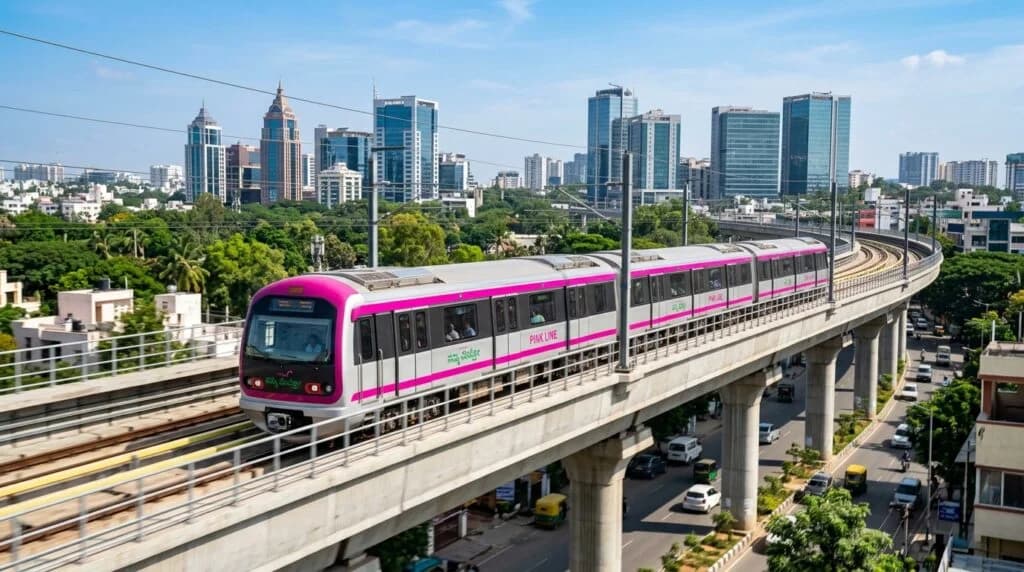
Everyone talks about Mysore Dasara. But if you are staying in Bengaluru this Navaratri, the city has its own festival season – more than 50 Durga Puja pandals, Devi temples in full alankara, and most of it reachable by metro. This is the transit-first guide: where to go, which station to get off at, and when the last train leaves so the evening ends well.
The 2026 dates that matter
| What | When |
|---|---|
| Navaratri 2026 | 11 – 19 October |
| Vijayadashami / Dasara | Tuesday, 20 October |
| Bengalee Association Ulsoor puja days | 16 – 21 October |
| Peak pandal evenings | The Ashtami-Navami weekend, 17-19 October |
Durga Puja pandal hopping, by metro station
 Wikimedia Commons,
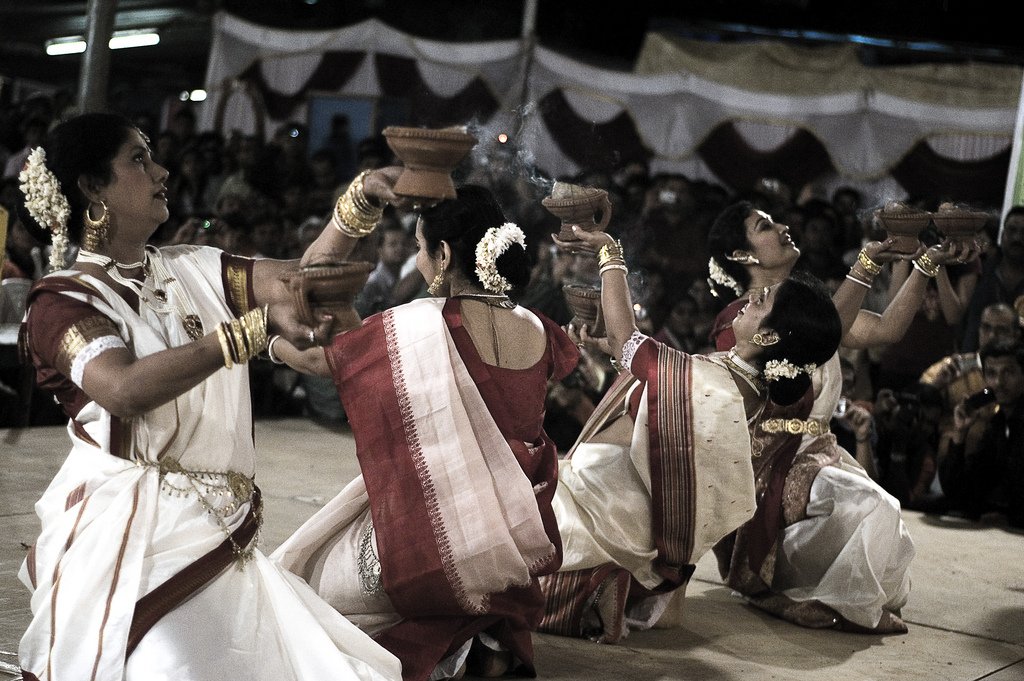
 Ulsoor – the city’s oldest Durga Puja
The Bengalee Association’s puja on Assaye Road, Ulsoor is one of Bengaluru’s oldest and most loved – traditional idols, cultural evenings, and bhog served daily from Maha Saptami at noon. Puja days run 16-21 October this year.
Metro: Halasuru (about 1.5 km from the venue) or Trinity on the Purple Line, then a short walk or auto to Assaye Road.
Koramangala – Sarathi and Kolaj
Sarathi Socio-Cultural Trust (Mangala Kalyan Mantapa, opposite the Ganesha Temple, KHB 7th Block) is a full festival in itself – Bengali food stalls, live music and dance through the evenings. Kolaj Durga Puja, also in Koramangala, is known for creatively themed pandals, art competitions for children and lively aartis.
Metro: Koramangala has no station yet – honest answer. The closest approach is the Yellow Line: get down at Central Silk Board or BTM Layout and take a short auto ride in.
Whitefield and the east
The Whitefield belt hosts two of the city’s biggest community pujas. The East Bengaluru Cultural Association (EBCA) pandal is the giant of the east – idol, food court, cultural stage, the works. It sits about 3 km from Whitefield station on the Purple Line, and the organisers usually run shuttle services from the station on peak evenings. The Poorva Bangalore Cultural Association (PBCA) pandal is the other Whitefield fixture, about 2 km from Seetharamapalya station, one stop into the ITPL stretch. Hopefarm Channasandra covers the smaller community pujas further out.
Indiranagar
The Socio-Cultural Association’s Durga Puja keeps Indiranagar’s Bengali community busy through the week – a compact, friendly pandal with good bhog. It sits about 2.5 km from Indiranagar station on the Purple Line; hop into an auto at the station exit and you are there in under ten minutes.
Palace Grounds – the mega puja
When the Bengaluru Durga Puja Committee sets up at Palace Grounds, it is the largest single celebration in the city – a fairground more than a pandal. Honest metro answer: Palace Grounds has no station at its gates. Ride the Purple Line to Cubbon Park and take a quick auto up the Jayamahal side – still far easier than driving in, because festival-evening parking there is its own ordeal.
Electronic City and the south-east
Pandals have spread with the city – Electronic City’s community pujas are now a Yellow Line ride away. Metro: Electronic City station.
Kengeri and the west
The western suburbs join in too. Metro: Kengeri or Kengeri Bus Terminal on the Purple Line.
Pandal venues can shift year to year and many smaller community pujas pop up across neighbourhoods – check the organiser’s announcement for exact timings before a long trip.
Devi temples and Shakti shrines near the metro
Sri Banashankari Temple – the one at the metro gates
The most metro-friendly Devi darshan in the city, full stop: Banashankari station on the Green Line stands about 500 metres from the temple gates – a five-minute walk. The shrine of Banashankari Devi draws its biggest crowds of the year through Navaratri – go early morning or be ready to queue on Ashtami and Navami.
_03.jpg) Wikimedia Commons,
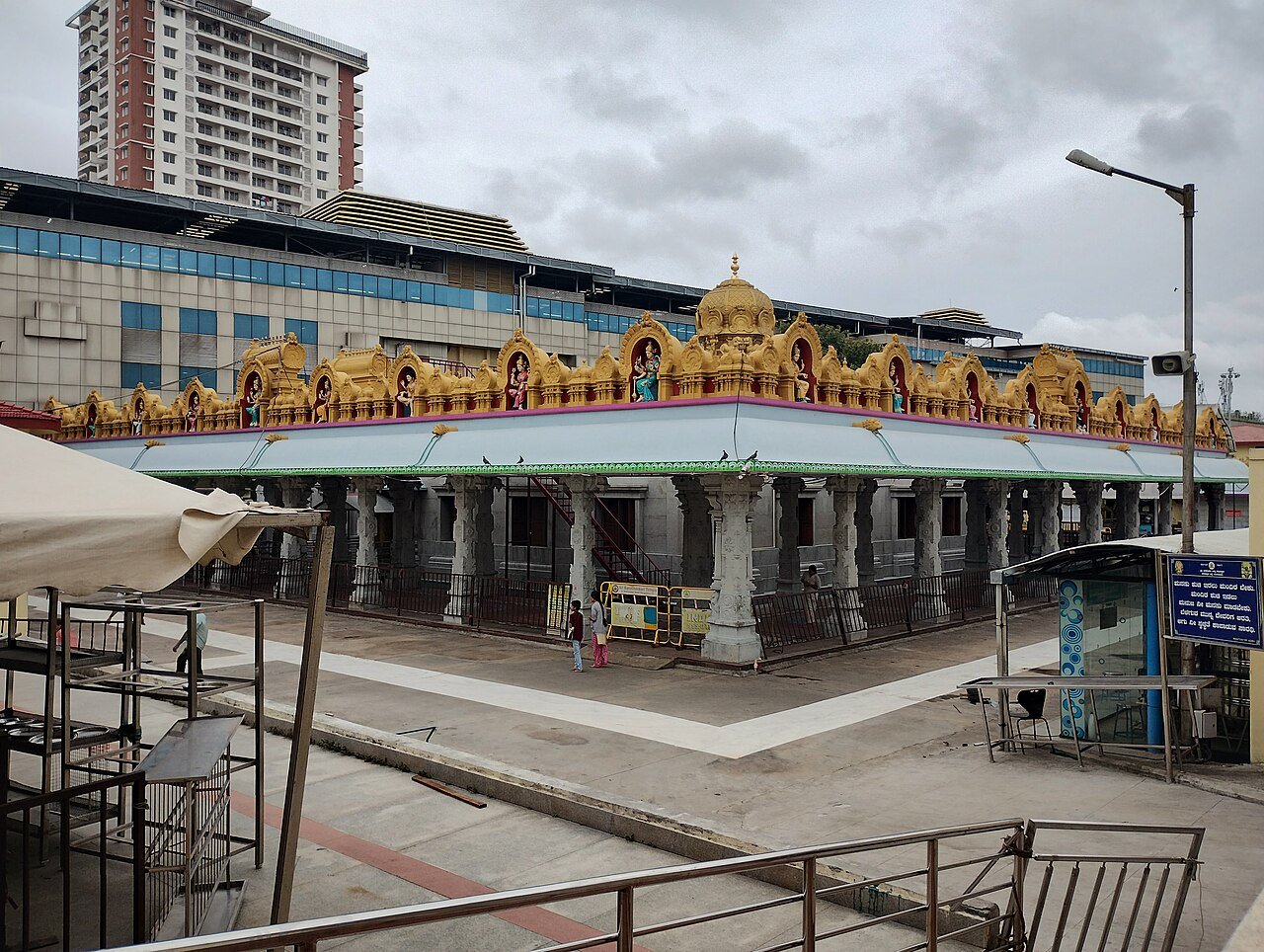
Wikimedia Commons, Sri Pratyangira Devi Temple, Turahalli
On the forested Turahalli edge of the city, the Sri Pratyangira Devi temple draws serious Devi devotees through Navaratri – the fierce form of the goddess, and homas running through the fortnight. Metro: Vajarahalli on the Green Line is 1-2 km away; an auto from the station takes five minutes.
Halasuru Someshwara Temple – pair it with the Ulsoor puja
Bengaluru’s oldest surviving temple, with Chola-era pillars and a Kamakshi shrine that gets its own Navaratri alankara. It stands a short walk from Halasuru station – which makes a perfect evening: Someshwara darshan first, then the Bengalee Association pandal on Assaye Road, all on one metro stop.
The Malleshwaram circuit
Malleshwaram does Navaratri the old Bengaluru way – Kadu Malleshwara temple and the lanes of 8th Cross lined with flower sellers, gombe (doll) displays in shop windows and evening poojas in every block (doll shopping is covered in Part 3 below). Metro: Mantri Square Sampige Road or Srirampura on the Green Line, both a short walk from the temple street.
Sri Rajarajeshwari Temple – the temple that named a neighbourhood
Rajarajeshwari Nagar takes its name from this Devi temple, which dresses up through Navaratri. Metro: Rajarajeshwari Nagar on the Purple Line, then a short auto ride to the temple arch side.
Your neighbourhood Devi temple
Nearly every Bengaluru locality has an Amba, Durga or Chamundeshwari temple running special alankara and evening pooja this fortnight – often a better experience than a cross-town trip. Use the nearby explorer or Live Navigator to see what’s around your own station.
Bombe Habba – Gombe Mane displays and where to buy festival dolls
 Wikimedia Commons,
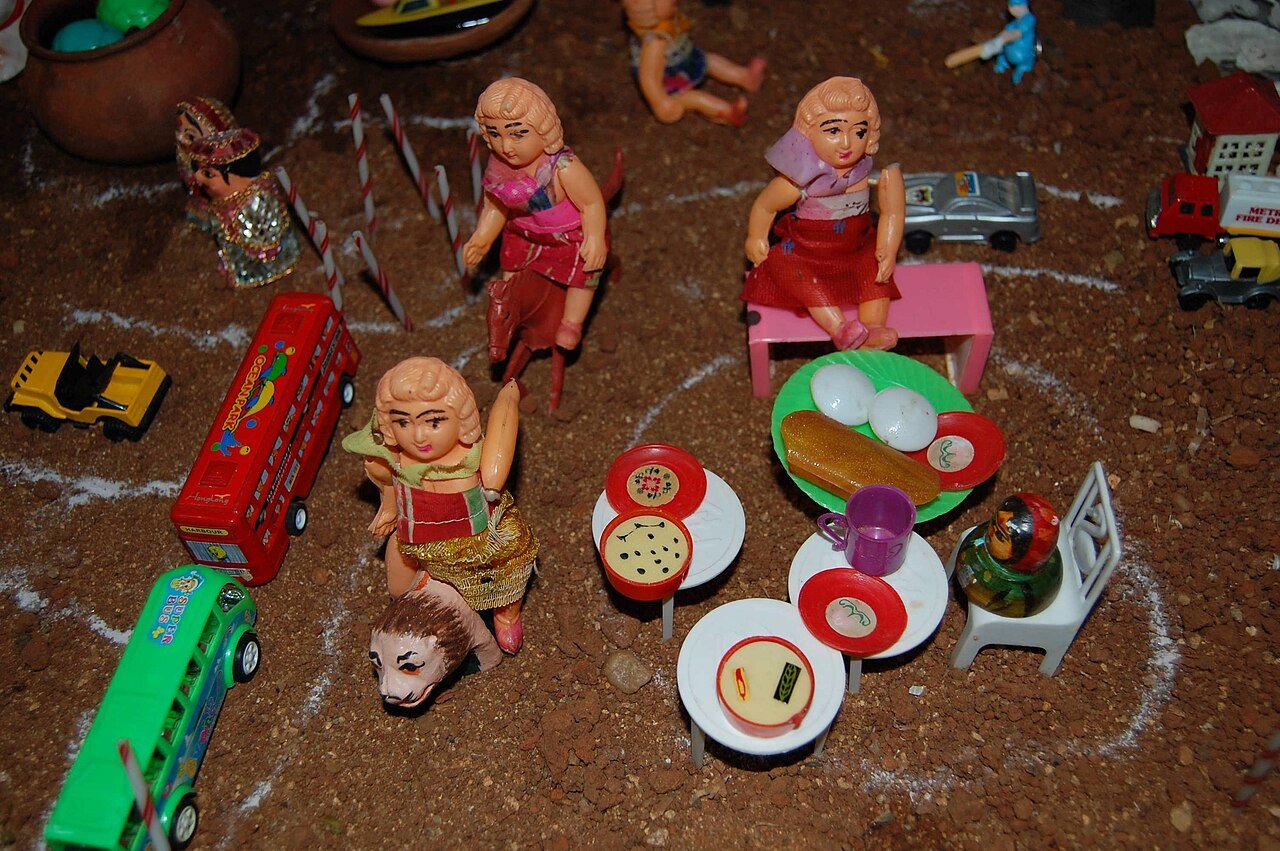
 No South Indian Navaratri in Bengaluru is complete without Bombe Habba, the doll festival. Households arrange traditional wooden and clay dolls – gombe – on tiered steps called a padi, and visiting neighbourhood homes and community showcases, affectionately called a Gombe Mane (doll house), is a cherished highlight of the season. Shop windows and cultural halls across the old city put up their own displays through the fortnight.
Malleshwaram 8th Cross and Temple Street
The markets around 8th Cross are legendary for traditional handcrafted clay dolls, papier-mache figurines, the wooden Marapachi couples that anchor every padi, and multi-tiered golu stands themselves. Metro: Mantri Square Sampige Road on the Green Line, then a short walk into the market lanes (Srirampura works too).
Dattatreya Temple Street, Basavanagudi
In the heart of South Bengaluru’s cultural hub near the Bull Temple, this street is lined with specialised gombe shops and doll makers offering intricate mythological and cultural sets – the place to build a padi from scratch or add this year’s themed set. Metro: National College or South End Circle on the Green Line.
The practical evening plan
- Go by metro, really. Pandal areas like Ulsoor and Koramangala are parking nightmares on puja evenings; the metro skips all of it.
- Watch the last train. Last trains run between roughly 22:45 and 23:05 depending on line and direction – pandal-hopping evenings run late, so check your return station’s timings on its page (every station page on this site shows live next-train times).
- Carry a smart card or use a QR ticket. Festival-evening token queues are long, especially at interchanges like Kempegowda (Majestic) – a card or the QR ticket in your phone walks past them.
- Beat the peak. Pandal-hopping and doll-viewing peak between 6 and 10 pm; ride in before six or after eight, and wear comfortable shoes for the last-mile walks.
- Plan the two-pandal evening: Ulsoor (Halasuru station) and a Koramangala pandal pair well – Purple Line to Yellow Line with a change at RV Road side, or a direct auto hop between them.
- Fare check: the fare calculator prices any station pair; most festival hops cost ₹10-40.
Frequently asked questions
When is Durga Ashtami and Navami in Bengaluru in 2026?
Navaratri 2026 runs 11-19 October, with Vijayadashami on Tuesday, 20 October. The biggest pandal crowds fall on the Ashtami-Navami weekend of 17-19 October.
Which Durga Puja pandal in Bengaluru is closest to a metro station?
The Bengalee Association puja on Assaye Road, Ulsoor – a short hop from Halasuru and Trinity stations on the Purple Line. For temples, nothing beats Sri Banashankari Temple: the Green Line station is at its gates.
Is there a metro station in Koramangala for the pandals?
Not yet. Get down at Central Silk Board or BTM Layout on the Yellow Line and take a short auto to the KHB 7th Block area.
How late does Namma Metro run during Navaratri?
Standard timings apply – last trains between roughly 22:45 and 23:05 depending on the line and direction. BMRCL announces any festival extensions separately; check your return station’s page before a late evening.
Where can I buy Dasara gombe (golu) dolls near a metro station?
Malleshwaram 8th Cross (Mantri Square Sampige Road station) and Dattatreya Temple Street in Basavanagudi (National College or South End Circle station) are the two classic doll markets, both on the Green Line.
Can I do Mysore Dasara by metro?
Mysore is beyond the metro network – that trip is by train or bus from the city. But if you are in Bengaluru for the season, the pandals and Devi temples above make a full festival weekend without leaving the network.
Make commuting simple.
Station Seekers helps you find the best nearby PGs, rentals, and coworking spaces in Bengaluru.